Friday, January 6, 2017

Chapter 4: Working in the Digital Age

There has been an obvious change in the way in which photos are being transmitted from the early days of photography to today's day. To think of how quick things can be done now is amazing. When I first did my research on photogravure I spoke of the great deal of time it took to print just one photo. Photogravure was a beautiful way of printing images, but as the technological advances continued it became much easier than that and much easier to transmit the photos all together.
            The ability to send photos just as they are taken is so fast in today’s world. The ease that the process of wireless transmission has given photojournalists is amazing. In the Dallas News article, they stated, “transmission times were painfully long.” They also stated, “one color photo took a minimum of twenty six minutes to transmit.Sending internationally took twice as long, sometimes up to an hour per photo.” Now could you really imagine waiting that long to transmit just one image? Well they then came up with the Dixel, which transmitted a color photo within two to three minutes. There was just one thing, “it was a travel nightmare, sofragile.” So yes, it was faster but also much more prone to breaking.  Now with wire services photojournalists are able to send photos almost instantly with their cameras and they are also able to use their phone to take images and upload them instantly.
            If you imagine back in the beginning days with no wireless transmission photojournalists needed to carry everything with them. Before they needed to have a full van with their gear, then they needed a strong back to carry everything, and now they simply need their camera connected to a wireless transmission. The work it took to transmit photos before wireless transmissions was incredible and we have to really admire the work of photojournalist in that time. Even thinking of Robert Capa’s photos being destroyed by the lab technician, if those photos were taking today it is highly unlikely that that would have happened. The Magnificent Eleven article stated, “a darkroom technician in haste, dried the film to quickly and theexcess heat melted the emulsion on all but ten of the frames.” Since photojournalist no longer use dark rooms and with the wireless transmitters this would have never happened, in fact we would have seen the images almost instantly today.
            This shift to wireless transmission has been beneficial to photojournalists for sure in making their jobs faster, but is everything about it good? According to Porfessor Nordell, “withtechnology there’s amazing advances, but also there’s similar perils.” I agree with this statement one hundred percent because though technology has helped ease the jobs of photojournalists tremendously it has also put them in dangerous situations. In the Syrian article they speak of photojournalist, Marie Colvin who died when the Syrian government forces attacked the media center she was working from. They stated, “Syria’s government has shownthemselves remarkably uninterested in whether an individual is a journalist ora rebel.” This puts photojournalist in great danger when using these wireless transmitters because it means the government can track them down and kill them as they did with Marie Colvin. So, I end this with is a photojournalists safety worth the easy advances?


Photo by: Tiffany Mueller


Photo by RK Goth


Thursday, January 5, 2017

Chapter 3: The Art of Photojournalism

Photo by Alexander Gardner
Year Created: 1865


Texture

The texture in the photo is hard and wet. The texture of this image is very evident. Since this image was taking during the times of the civil war I believe the hard texture represents the hard life these poor children and women were living at the time.


Subjects Expression

All of the subject’s expressions in this photo seem to be very serious and somewhat sad. No one is blinking and I believe they knew the photo was being taken. The postures of each subject definitely fits their serious/saddened expressions on their face. They all seem pretty down, most likely because this was during the Civil War.


Is this image black & white or color?

The image is in black and white. Due to the era in which this phot was taken the photographer did not have a choice, whether he wanted black and white or color. the black and white fits this photo very well because of the serious nature of this photo and the time in which it was taken.


Why I chose this image?


I chose this photo because out of all the images I searched the raw emotion of this photo during the time period really touched me. Living during the era of the Civil War was no easy thing and I believe the emotion and quality of this photo truly shows and emphasizes this. There is also not one man in this photo, which I believe shows how strong these women had to be for their children, and I truly admire a strong woman.


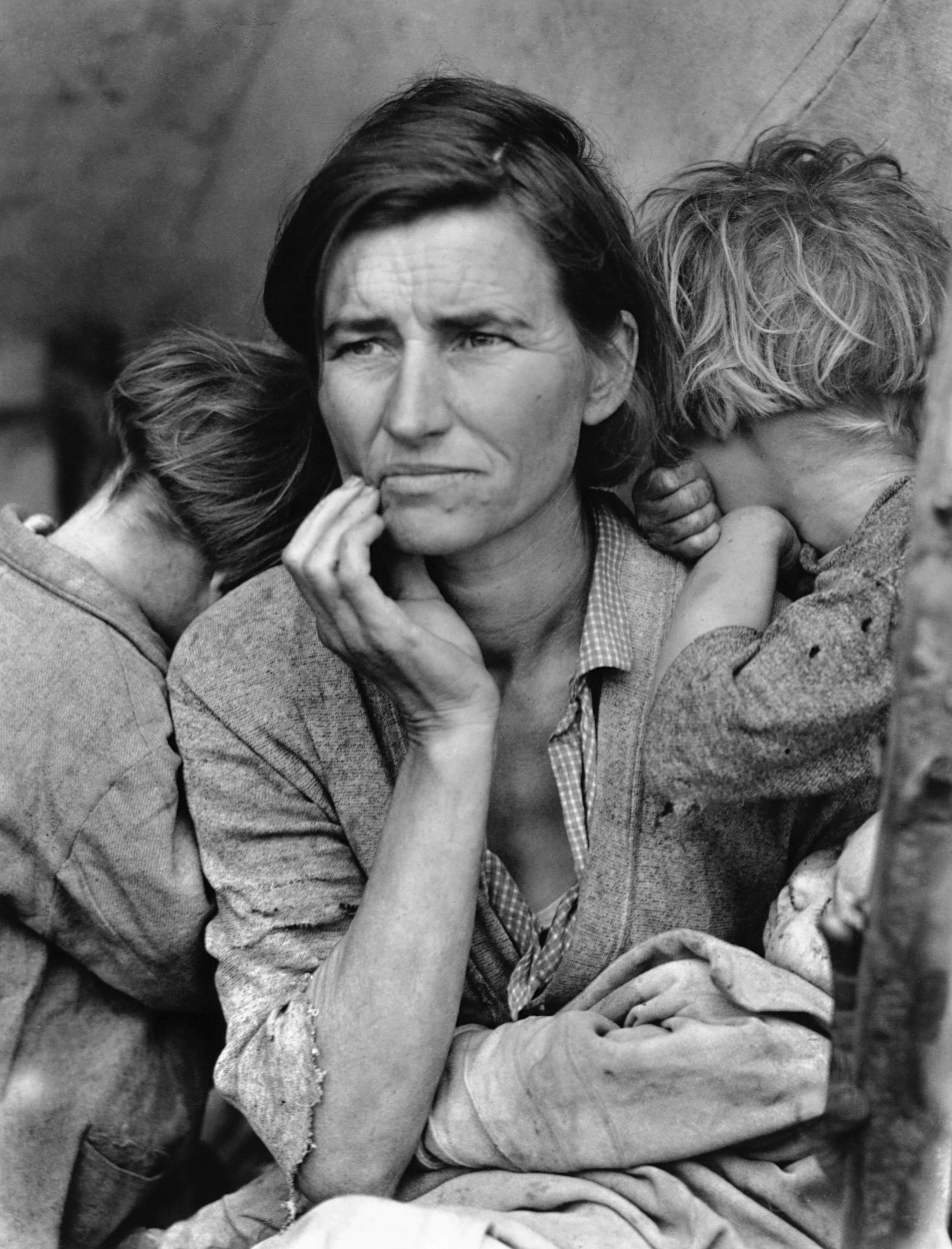
Photo by Dorothea Lange
Year Created: 1936

Keep it simple
                This picture is simple. What some people fail to realize is that sometimes less is more. The simplicity of this photo allows the message to be clear. This photo was taking of a mother and her three children during the Great Depression. It is clear to tell that the mother is sad and her poor children appear to be just as sad.

Obvious main subject, about 1/3 to 2/3 of image area
                The main subject takes up pretty much the entire image. I believe of the impact of the main subject being so big makes this image that much more powerful and gives people such a strong emotion to feel for this mother and her children. If there was more going around in the background I don’t believe the image would have been so strong and had such a powerful impact.

What feelings does the image create?
                I feel sad. I feel sad to see this poor mother and her children suffering because of the Great Depression. Being a mother myself I couldn’t imagine going through a period like this alone, let alone having to have my poor innocent child go through it with me.

Why I chose this image?
                I chose this photo because as we know living during the Great Depression was very difficult and I believe this photo of a mother and her children truly shows just how hard it really was. This photo doesn’t just focus on the mom and how hard it was for her but it also focuses on the poor children who were also greatly affected. Anyone with a heart would feel for this mother and her children as I do.


Photo by Ammar Awad
Year Created: 2013


Contrast appropriate
                The contrast in this image is high, meaning there are very bright areas as well as very dark areas. The contrast in this image really helps the image to standout and we can really see the focus. It creates the mood of the seeing the individuals take cover in the middle of the war and seeing the smoke all around them just how scary that must have been.

Background compliments or detracts from composition
                The background of this image really helps to complete the photo. Without the background of this image with the smoke and the fire it wouldn’t be possible to be able to see what the individuals were really taking cover from. The background truly adds meaning to this photo and helps it to standout.

Depth of field
                The right amount of area is definitely in focus. The focus is clearly on the individuals taking cover and it’s just the right amount with the background to stand out.

Why I chose this image?
                I chose this image because it was really quite interesting to me and it just really stood out. The way people taking cover are dark like shadows and the way the background is so bright and clear really intrigued me. The way this photo was taken really emphasizes what was going on in the background and what they were taking cover from.

Wednesday, January 4, 2017

Chapter 2: Pre-Digital Photographic Technology

Photogravure is an extremely sophisticated way of photo processing. According to Art of the Photogravure, “photogravure has played an essential role in the origin and evolution of photography.” It is considered to be one of the finest methods ever of picture making. After watching a video on photogravure printing, I was able to see the time and effort it took to do this type of printing. With all the time and patience the photo came out beautiful, you could see every detail, it was truly an amazing photo. Photogravure produces some of the most exquisite photos in this world.

There has been so many different ways of printing photos and taking photos in the past, but photogravure definitely was one outstanding way. This type of printing was much easier as the photographers did not have to carry of all the equipment with them or they didn’t have to sit in a dark room in order for them to print. As Professor Nordell stated, “this whole van was required to bring all of the equipment,” so before photogravure, just to take photos they had to carry around with a van full of equipment and had to rush to the van before the plates dried out. Unfortunately, according to Art of the Photogravure, “such a superior method was a thing of the past by world war II.” However, they did also state that there are many photographers trying to revive this beautifully forgotten art.


Photo by Lothar Osterburg
Image Source:


Photogravure made photography recognized as such fine art. Photogravure was able to capture beautiful moments and memories, just as photojournalists do. Photojournalists are their own kind of artists. The unfortunate thing about photogravure was that it was a very long process, so because of this many photographers and photojournalists looked for easier ways to create their images, which is why photogravure was eventually just a thing of the past. I believe photojournalists had a great appreciation for the beauty of photogravure, but found different more easier ways to print their photos.

The difference between photogravure and taking a photo and printing it from a smartphone is huge. The time it used to take to print, as I said in one video I watched was tremendous, versus now where it is so quick. Now a days we have the benefit of being able to take a photo and instantly being able to see it. Smart phones and digital cameras also auto focus as well your able to choose if it’s a motion photo. As Professor Nordell stated, “people beforephotography had no idea how the body looked like frozen in the air.” Since we are able to take motion picture we are able to see for example in sports the body in so many different positions during motion. It is truly amazing getting to know and understand the great history of photography and how much it has changed.


Photo by Ashley Alvarado


Tuesday, January 3, 2017

Chapter 1: Can Photographs Change the World?


Photographs can be extremely powerful and impacting to not only individuals themselves but to the entire world. One picture alone can give someone an immense feeling and can change someone’s entire perspective on things. So, the question is can one photo alone change the world? Can a photo really have that much power? My answer to those questions are yes, yes, a single photograph can change the world and the way people view things. Sometimes a photographer may not even realize how much of an impact that one photo he or she took may impact the world, but it is possible.

People around the world never really get to see the hardships and struggles around the world, so ultimately, they never know what is really going on. As Ted Rall states, “Americans don’t see the brutality of their wars in the newspaper, on the nightly news, in their weekly magazines, or at the movies.” Why is it fair that people don’t truly get to see the huge impact war has on everyone, years ago there was no censorship so the photographs people would see were horrifying and the harsh reality of war. Now due to censorship no one really sees what is actually going on. This goes with what Profess Nordell said, “the concentration of ownership in media can constrict the flow of information to the media.” It unfair that the media is controlled by such little companies so what people see is very limited to what they want to be seen. In the Business Insider article they stated, “since 1983, 50 media companies have been consolidated to just 6, and those 6 companies control 90% of the media in America.” Just by reading this statement alone we can only imagine how limited we are to what they allow us to see. However, with citizen journalism people are beginning to see more and more of what they want to be censored. In the Guardian article they state, “until American law enforcement reverses its increasing tendency to regard communities as war zones and the people in them as enemy combatants- perhaps we should keep our phones handy.” By doing this people are able to capture anything, as it is their right, so we Americans can truly see what is going on around the world.


Photo by Salman Mohammed
Image source:


The above picture truly impacts me, not only because I am an empathetic person but because I am a mother myself to a young boy. Seeing these starving children truly hurts me and makes me so sad that such young children are starving and don’t know any better. Seeing a photo like this makes me so appreciative for the little things in life that so many people take for granted. There’s so many people in this world who are so picky with what they eat and when I see these young children who wouldn’t even think twice about what they’re eating as long as they have something, it bothers me that people can truly complain about what they have to eat. It is so heartbreaking to see this as a mother and I can only hope that in the future we can help these poor innocent children.


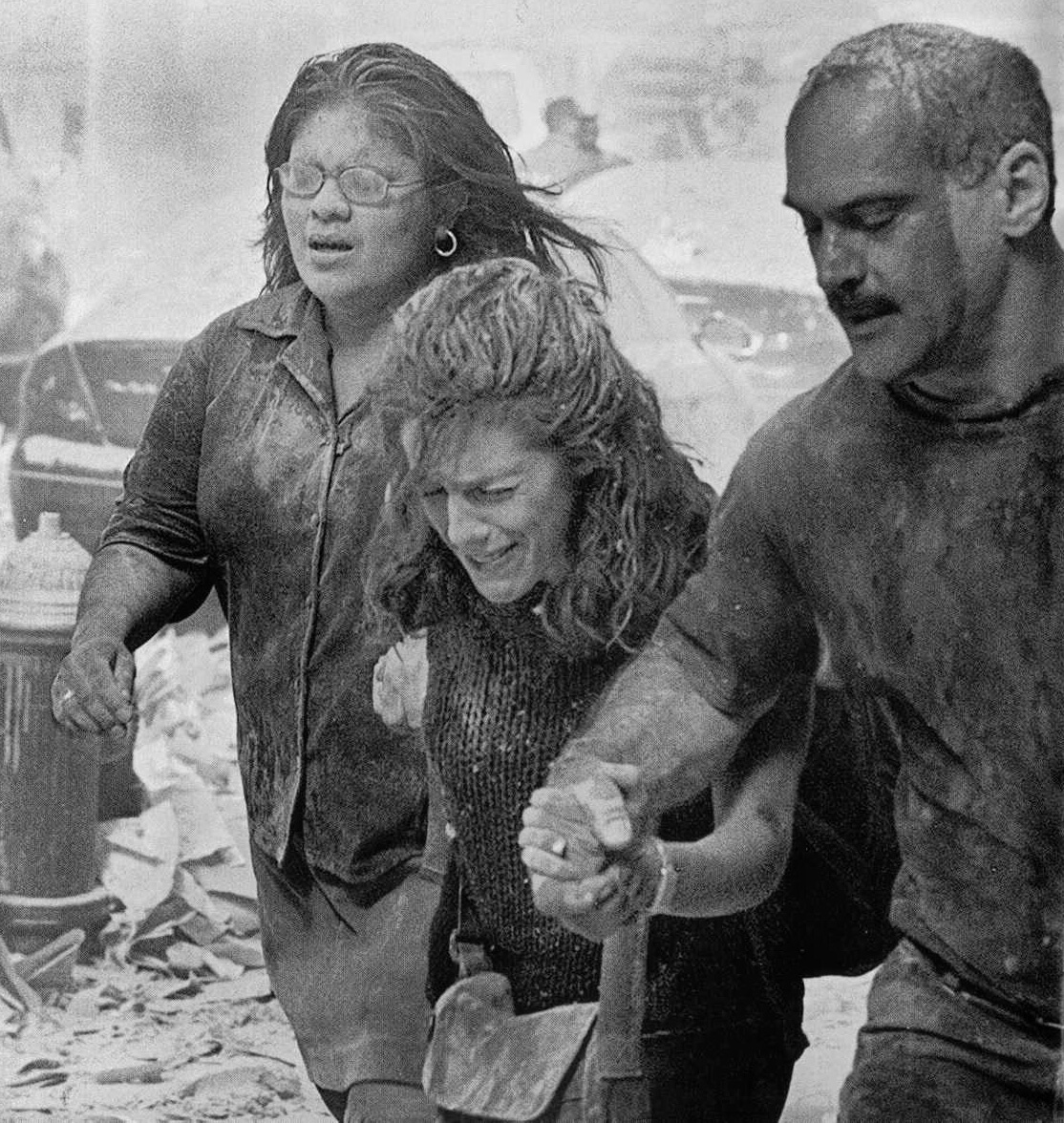
Photo by Tina Moore
Image Source:


This image from the 9/11 attacks truly impacted so many people. This image showed the hardships everyone was facing in New York during this time. If it were not for a photo like this I do not believe they would have received as much help as they did. Seeing all of the damage as outsiders brought so many people together from around the world to help everyone and help the families that lost loved ones. Photos such as this one, truly helped to bring the country together to work as one to bring New York back up after this tragedy.

Monday, January 2, 2017

Introduction to the History of Photojournalism

Photojournalism is the practice of communicating news through photos. As Professor Nordell stated, “if youbreak up the word photojournalism into two words, photo and journalism, itmeans photographs created to be published in journals.” Photojournalists need to be able to work on their own to be not only an excellent photographer, but also an excellent journalist. This means they need to be able to have a specific set of skills as both a photographer and a journalist. They are visual storytellers, who need to be unbiased, fair, and need to know what is going to get the viewers’ attention.
In the videos viewed it showed that there are different types of photojournalists. There are some that are small town photojournalists who may follow you from young to old and there are also those who put their lives on the line to get that perfect photo. Jason Henske was a small town photojournalist who in a video explained his experience as a photojournalist. He explained that as a small town photojournalist you need to be able to capture many different things, there is no one focus. In his video, Henske states, “itis difficult separate your feelings as a friend and your feelings as aphotographer.” On the other hand, there is Zoriah and Alissa who put their lives on the line in war zones to get their photos. These types of photojournalists are not guaranteed their life, but this just shows how determined they are. Zoriah stated, “it allows me to create my own projects myself and togo out into the world on my own and if I fail there’s only one person to blameand if I succeed I can give myself a pat on the back.” This shows another great aspect of photojournalism and why people love it because it is a passion and they can do it on their own.
History is extremely important to know. In the video, Why study history, it says, “understanding the past isthe key to understanding the present. It trains us to gather evidence, and tofind patterns and trends. It challenges us to think outside the box and to becreative.” Photojournalism helps up to understand both history and the present. Without knowing the history and looking at the images and studying them there would never be changes in today’s world. It is important to use photojournalism to make a change. As James Nachtwey stated, “If war is an attempt to negatehumanity, then photography can be perceived as the opposite of war, and if it’sused well, it can be a powerful ingredient in the antidote to war.” This statement is powerful because it shows that photojournalism is not only used to tell stories, but to help make a change.
Photojournalists are passionate and courageous individuals. They help to make a huge impact on society so that people can see what is going on around the world. They go through any means necessary to get that perfect photo, whether it means risking their lives or not. Telling a story with a photo makes it so much more powerful to individuals when they can actually see what is going on. It takes a strong, passionate, and courageous person to be a photojournalist.

Photo by Chris Wade


Photo by Jack Kurtz
Image Source:


History of Photojournalism

Photo by Jerry Uelsmann
Image Source: http://shiningseals.tumblr.com/post/51133433127/jerry-uelsmann-photographer